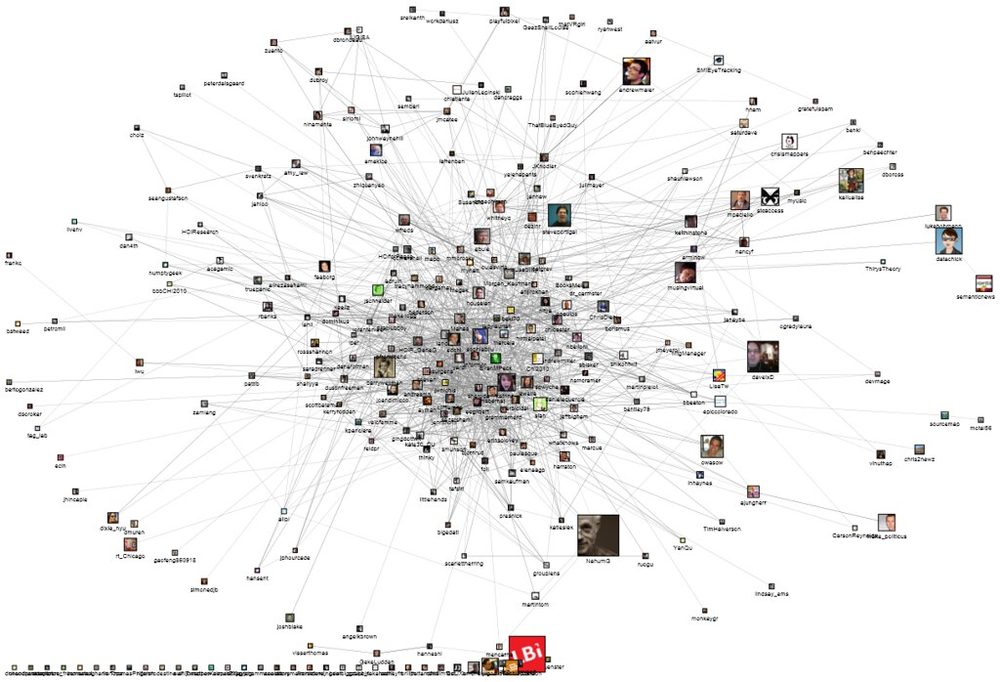
The segmentation run finishes on a Friday afternoon and hands you eight clusters, each with a confident name: Quiet Loyalists, Price Checkers, Weekend Browsers, Lapsed Enthusiasts and four more. The charts look wonderful. On Monday your team has one newsletter and a salesperson with a free afternoon. All eight segments get the newsletter.
Nothing went wrong with the model. The problem is the order you did things in. You asked a tool how your customers differ before deciding how many different things you are able to do for them, and the second number is the one that limits you.
So here is the question to answer before you open any segmentation tool, including the approach in the free guide to AI customer segmentation: how many segments can your team actually use? My answer is short. You can use as many segments as you have different treatments you are prepared to run and keep running. Count the bins before you sort anything into them.
A segment only exists if you treat it differently
A segment is a group of customers who should get something different from everyone else: a different message, a different offer, a different moment, a call instead of an email, or deliberately less contact. If two groups get exactly the same thing from you, they are one segment with two names, however different they look in the data.
That definition is unfashionable because it makes most segmentation projects smaller. It also makes them useful. Segments you cannot act on cost you in two ways: somebody maintains them, and they give the team a pleasant feeling of sophistication while every customer still receives the same email.
Count your treatments first
Before any data work, write a list of the treatments your team could run next month and keep running for at least a quarter. Be honest about capacity. A treatment needs someone to produce it every single time and someone to notice when it stops working.
- A different email or sequence: a win-back message, a reorder reminder, an upgrade offer, a how-to for new customers.
- A different offer: a bundle, a service plan, early access, a trial of something new.
- A different channel or person: a phone call from sales, a text, a handwritten card, a visit.
- A different moment: contact at the renewal date, after a first purchase, before the busy season, on the anniversary of a first order.
- Deliberately less: no promotions for a while.
For many small teams, the honest count is two or three, and that is fine. I would take two segments treated differently every week over eight treated identically.
The merge test
When a tool or a spreadsheet does hand you a list of segments, run one test on it. For each segment, write the actual first message you would send: the subject line and the opening sentence, not a description of the strategy. Then lay the messages side by side.
Try it on three of the Friday clusters. For Price Checkers you write "The plan you looked at, and exactly what it includes." For Weekend Browsers you write the same line, word for word. For Lapsed Enthusiasts you write "It has been a while, so here is what changed since your last order." The first two are one segment, whatever the data says about the days they like to visit. The third might be real, as long as somebody will keep writing that message every month.
Wherever two segments got the same message, merge them. Wherever you could not write a message at all, the segment is either a question for later or an interesting fact about your customers, and it is not yet something you can use. What survives is your real segmentation, and it is usually much shorter than the one you started with.
The bin most teams forget
One bin deserves a place in almost every scheme: the customers you should leave alone. Someone who bought yesterday does not need a promotion today. Someone who complained last week needs their problem fixed before they hear from marketing again. Someone who opened nothing for a year may need a single honest question about whether to keep writing, and then silence. Someone who asked to hear less should hear less.
Leaving people alone is a treatment. It protects your sender reputation and your relationships, and it is the cheapest segment you will ever run. It also forces a useful discipline: every other segment has to justify why its customers should hear from you more.
A starting set for a small team
If you are starting from nothing, I would begin with two treatments and the leave-alone bin, each defined by behavior you already record.
- Ready to buy again: customers whose last purchase is about as old as your usual gap between purchases, or who looked at your pricing page recently. Treatment: a reorder or renewal message, or a call.
- Gone quiet: customers well past that usual gap with no visits and no replies. Treatment: one win-back message with a reason to come back, then stop.
- Leave alone: recent buyers, open complaints and people who asked for less. Treatment: nothing promotional.
Everyone else stays on the regular newsletter. Run this for a quarter. Add a fourth bin only when you can name its treatment and the person who will produce it.
Where the AI earns its keep
None of this means ignoring the models. Once you know your bins, AI is very good at the hard part of sorting: finding which behaviors predict which bin a customer belongs in, and noticing when someone moves from one to another. That is a much better use of a model than naming eight clusters nobody will treat differently.
I will concede the other side, too. Exploratory clustering sometimes finds a group you did not know existed, and that can be valuable. Treat it as a question. Talk to a few of those customers, work out what they need that others do not, and add a bin when you have something different to offer them.
The AI customer segmentation guide takes the next steps: a stack of twenty behavioral signals worth collecting, how to build and statistically validate clusters, an activation framework mapping message, offer and channel to each segment, what your email platform and CRM need to support, the consent side of behavioral data in a US B2B context and a quarterly refresh. It is a free PDF. Read it after you have counted your treatments, and it will be obvious which of its chapters you need now.
Start with a sheet of paper and two columns: the treatments you can run next month, and the person who will run each one. When the list is done, count the lines, and add one for the customers you will leave alone.
See who Google and AI recommend instead of you
Enter your website and get a free check of what Google and AI actually read about your business — and who they point people to instead. No call, no account: the report renders right on the page.
Run my free check →Share this article
Comments
Leave a comment